AgroFood Supply Chains in PeriUrban Biology Diagrams The Sustain Pro Initiative. The SUSTAIN Pro initiative is dedicated to fostering sustainable food systems and productive landscapes in Tanzania and Mozambique.By integrating sustainable agricultural practices, restoring land health through Nature-based Solutions and landscape partnerships, and driving investment in sustainable value chains, SUSTAIN Pro aims to balance economic growth with 1. Introduction. Food is a basic need for humans but the way in which much of it is produced, distributed, and consumed, is not sustainable. Challenges include among other things, biodiversity loss, climate change, environmental degradation, diet-related diseases, and unequal access to food (Schneider et al., Citation 2023).A 'food system' perspective helps to better understand the root Food and agricultural systems are complex, interconnected, and heavily influenced by unpredictable factors such as weather, conflicts and crises such as Covid-19. To effect change in these systems, we must pull on multiple levers of change at the same time. We group our work into three types of change - change on the ground in landscapes and value chains; change in the enabling environment
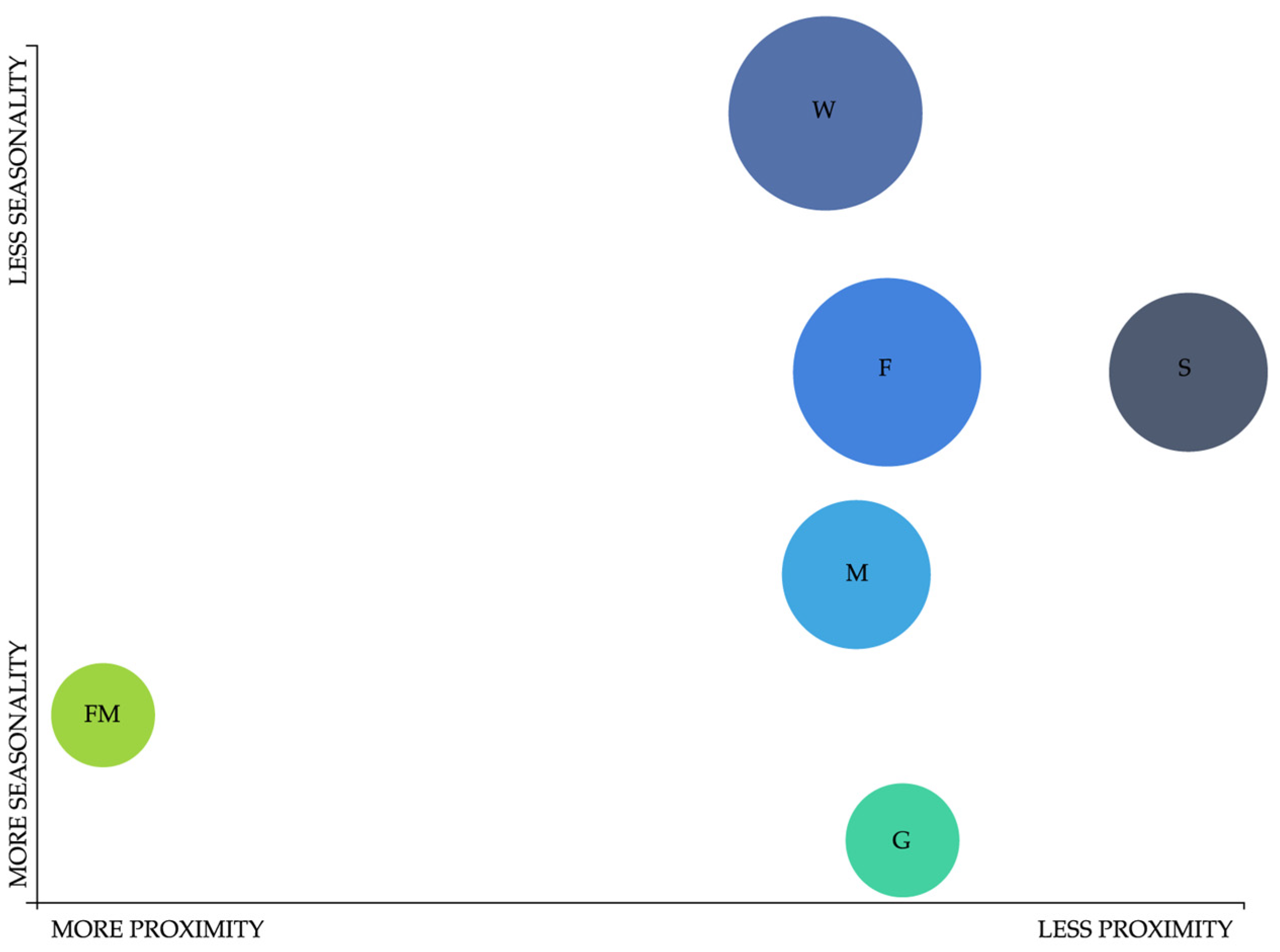
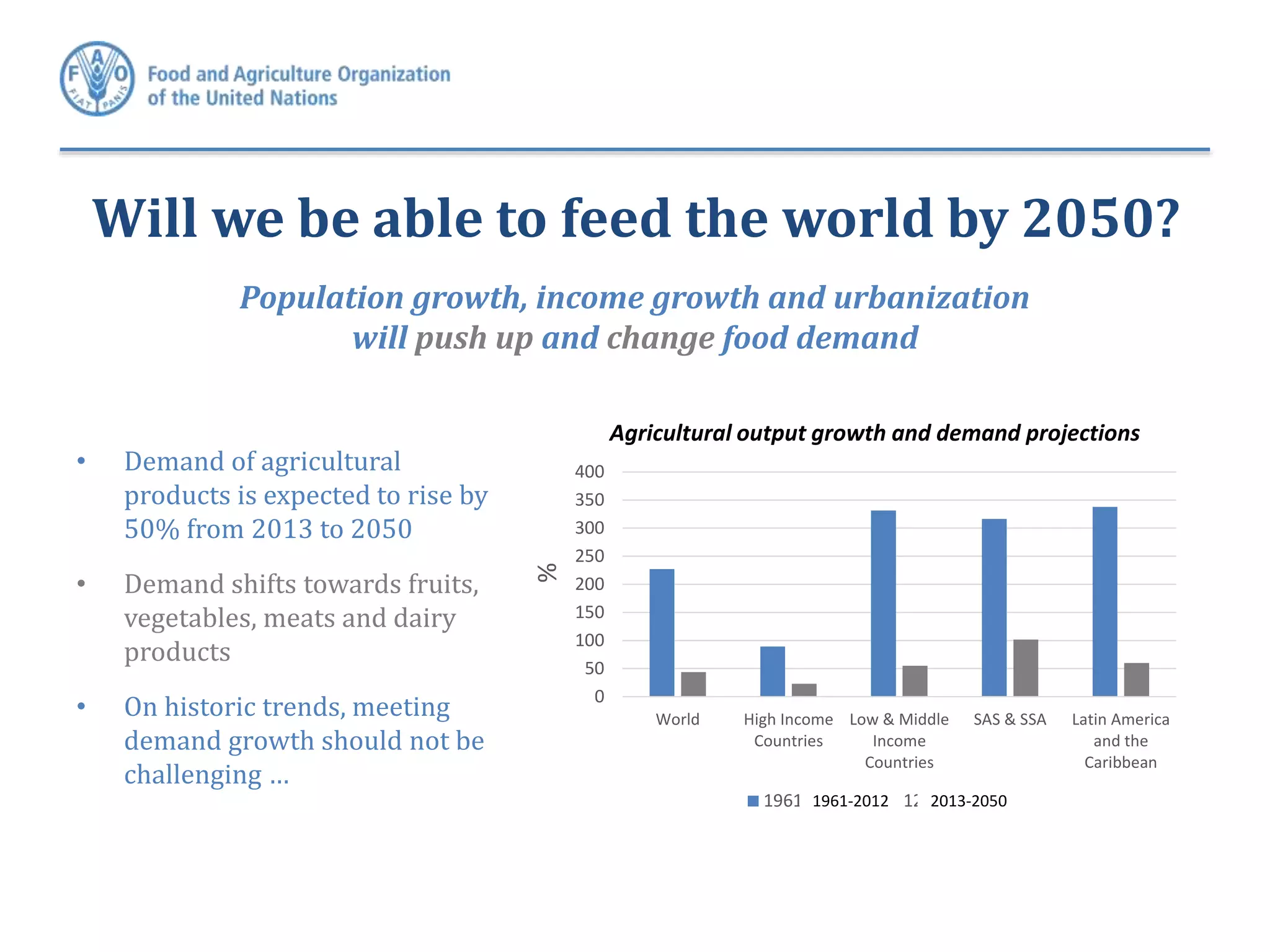
The transition to healthier, more resilient and regenerative agriculture and food systems presents a tremendous opportunity to address some of the planet's most pressing challenges, including climate change, environmental degradation caused by extractive production practices, and a human health crisis caused by declining nutrient density in food. The changes in food consumption cannot be explained by population growth itself. Climate change and climatic extremes might greatly affect the food chain, from the production process to consumption. Henle et al. (2008) reviewed the conflicts between biodiversity conservation and agricultural activities in agricultural landscapes. Poverty, disease, and climate change are overlapping challenges. Changing the way food is produced and consumed can help address the problem. FoodSystems 2030 (FS2030) seeks to build global consensus on transforming food systems by 2030, fostering healthy people, a healthy planet, and healthy economies.
Change on the ground: landscape and value chain action Biology Diagrams
Introduction. The impact of climate change on agriculture already has negative consequences for food security [1,2], populations [2,3], and economies [3,4].The Intergovernmental Panel on Climate Change projects that climate change will likely negatively impact average global crop yields as soon as 2030 [], with already declining yields in Africa [], South-Asia [], and the UK [] threatening Value chains in the food system can often be characterized by producing, processing and packaging, retailing and distributing, and consuming steps (Ericksen, 2008; Ingram, 2011).The most basic influence of the value chain on land-use change is opening access to consumers, which could motivate production beyond a level of subsistence, and thereby further intensification (Meyfroidt et al., 2018).

