Human Ribcage Photograph by Sciepro Biology Diagrams The rib cage is a bony framework in the thoracic region that provides structural support and protection for vital organs such as the heart and lungs. It is composed of 12 pairs of ribs, the sternum (breastbone), and thoracic vertebrae. The Human Bone Manual. Academic Press. pp. 102-104. ISBN 978-0120884674. Boileau Grant, J. C., Basmajian The rib cage is an important component of the human skeletal system. Ribcage functions both protective and functional roles. Ribcage functions both protective and functional roles. As seen in the ribcage diagram, it comprises of 12 pairs of ribs and forms a protective cage around vital organs in the thoracic cavity.
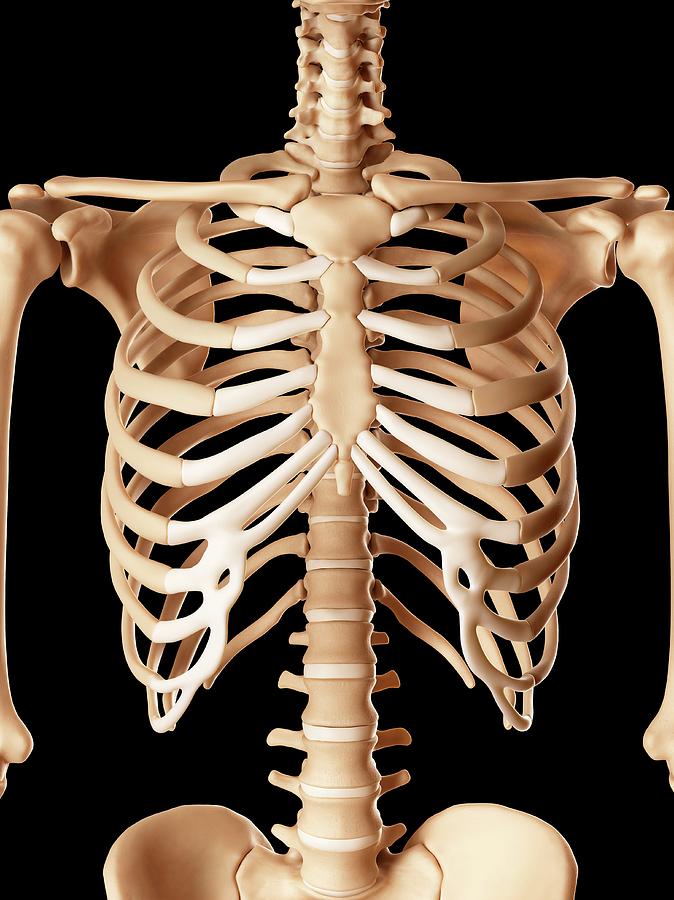
The ribs are 12 pairs of curved, flat bones that form the thoracic cage or rib cage, the bony structure that shapes the thoracic cavity and protects various organs. Despite being relatively thin and light, these bones are highly resilient. Where Are the Ribs Located. Ribs are located in the chest.

3D Skeletal System: Bones of the Thoracic Cage Biology Diagrams
The human rib cage comprises 37 bones: Sternum (1, unpaired): It is also known as the breastbone and can be felt at the center of the chest. This bone articulates with the first 7 ribs. Thoracic vertebrae (12, unpaired): These are the 12 bones in the thoracic spine (T1-T12). Each vertebra articulates with its corresponding ribs to shape the rib The primary function of the thoracic spine is to support and stabilize the rib cage. Ribs (12, paired): These elongated, curved, flat bones enclose the anterior aspect of the thoracic basket. Out of the 12 paired bones, the first 7 pairs articulate with the sternum via their respective costal cartilages.
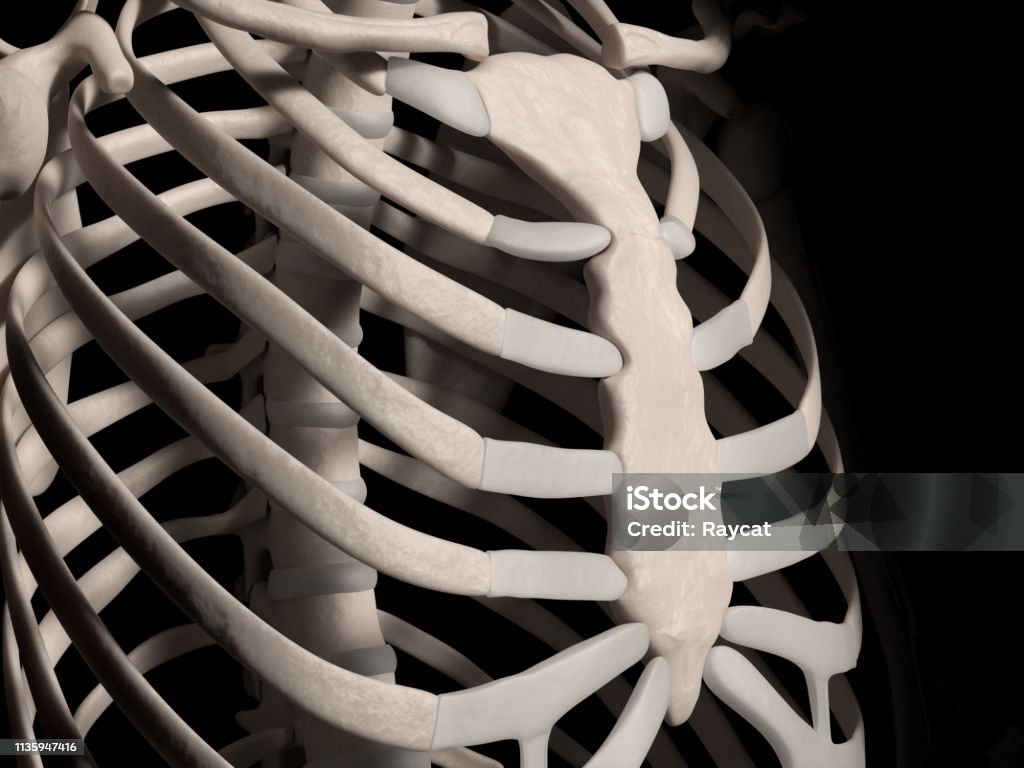
What are the parts of the human rib cage? As part of your skeletal system, your rib cage is made up of bones and the joints that connect them.. The bones include:. 24 ribs (12 on each side).Your ribs are the curving, horizontal bones that wrap around the sides of your torso, connecting your sternum (breastbone) in front to your spine in the back. This human anatomy diagram with labels depicts and explains the details and or parts of the Picture Of The Human Rib Cage. Human anatomy diagrams and charts show internal organs, body systems, cells, conditions, sickness and symptoms information and/or tips to ensure one lives in good health. A 3D illustration of a human rib cage from an
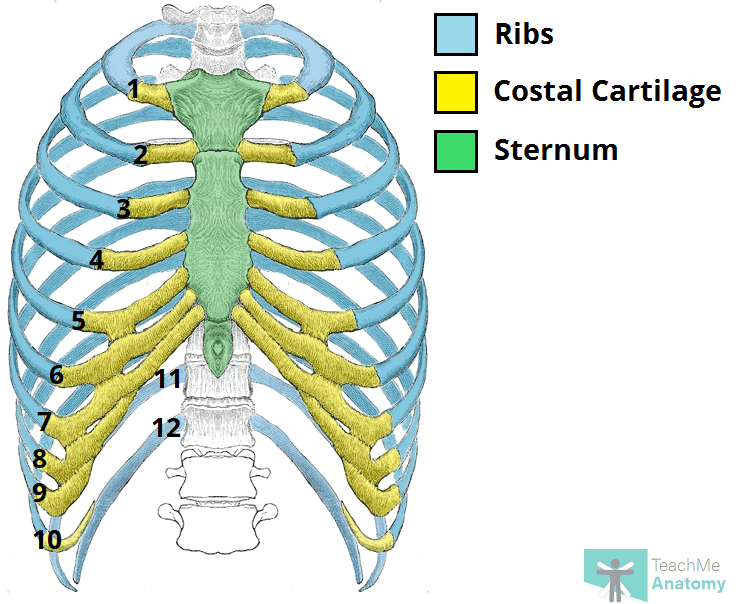
Rib Cage: Names of Bones, Anatomy, Functions, & Labeled Diagram Biology Diagrams
That's your thoracic cage—or rib cage, as it's more commonly known—pressing up against your hands. Without the thoracic cage, some of your body's most important organs would be unprotected, and your torso would be completely without shape. Imagine walking around with your lungs somewhere near your stomach and your shoulder girdle collapsing

